Author: oohaimandi@gmail.com
-
The Sixth Sense: Electronics Edition
The invisible technology that senses your every move
#IoT | ⏱️ 4-min read | Image :@ChatGPT

What if I told you that you have a sixth sense?
Not the supernatural kind—but a silent, brilliant one powered by sensors.
From the moment we wake up to the second we shut our eyes at night, electronics with built-in sensors are constantly observing, adapting, and responding. They don’t just react—they anticipate. They know when it’s too bright, too hot, too far, too close, or even when your heart is beating too fast.
Welcome to The Sixth Sense: Electronics Edition—a full day through the lens of smart sensors.
🌅 Morning: Sensed Awake
Your alarm didn’t just go off randomly—it may have used your sleep pattern data (via an accelerometer in your smartwatch or phone) to nudge you at the lightest sleep phase.
As you pick up your phone:
- A proximity sensor detects your hand and wakes the screen.
- A light sensor adjusts brightness based on room conditions.
Wearing an Apple Watch or Fitbit?
- Heart rate monitor starts logging your BPM
- SpO₂ sensor quietly checks your blood oxygen
- Accelerometers and gyroscopes track every stretch and step
You’re not just waking up—you’re being scanned, monitored, and optimized.
🚿 Bathroom: Clean and Connected
That automatic faucet? It uses infrared motion sensors.
Your electric toothbrush buzzes with pressure sensors, warning you if you press too hard.
Your smart scale? Uses load cells and bioimpedance sensors to measure weight and body composition.Even a smart mirror can use motion detection to light up just as you lean in to inspect last night’s stress pimple.
☕ Kitchen: Cooking with Sensors
In the kitchen, your appliances are more intuitive than ever:
- Microwaves use humidity sensors to prevent overcooking
- Coffee machines rely on flow and temp sensors for the perfect brew
- Smart fridges monitor temperature, door movement, and humidity
You’re not just cooking—you’re collaborating with electronics that “feel” heat, weight, and air quality better than you.
🚘 Commute: The Road That Watches You
Your car is practically alive with sensors:
- Backup cameras, ultrasonic sensors, and radar help avoid accidents
- Tire Pressure Monitoring Systems (TPMS) keep your drive safe
- GPS tracks your route, adjusted by accelerometers and gyroscopes
Even public transport has infrared ticketing, occupancy sensors, and smart signals using inductive loops that detect traffic flow in real time.
🧑💻 Office (or Home): A Workspace That Listens and Learns
Swipe your access card? That’s RFID tech.
Lights switch on as you enter? Hello, motion sensors.
Feeling just the right temp? Thank smart thermostats with humidity and thermal sensors.If you’re working from home:
- Webcams use light sensors for clarity
- Microphones adapt to ambient noise levels
- Some smart chairs even have posture sensors now!
You’re working in sync with devices designed to respond before you even ask.
🌇 Evening: Home, Smart Home
As you walk in, video doorbells detect motion and faces.
Your smart AC cools the room before you say a word—triggered by your phone’s GPS and presence detection.
Air purifiers use VOC sensors to detect pollutants.
Smart TVs adjust brightness using—you guessed it—ambient light sensors.Even your sleep is optimized, with wearables tracking movement, respiration, and temperature while you recharge.
🤖 Sensors: The Real Sixth Sense
We often credit AI or “smart” features when our tech behaves intuitively. But the truth is—it all starts with sensing.
Sensors are the bridge between the physical and the digital, turning real-world signals into data machines can act on. Without sensors, your smart tech is just code in a box.
As the Internet of Things (IoT) grows, we’re not just building smarter gadgets—we’re crafting environments that think, adapt, and react.
🧠 So next time your screen dims, your lights turn on, or your smartwatch buzzes…
It’s not magic.
It’s your sixth sense.
Just… outsourced to electronics.Conclusion: Living with the Sixth Sense
This “sixth sense” isn’t science fiction. It’s sensor-driven reality.
As the world moves deeper into automation, sustainability, and personalized experiences, sensors will continue to define the intersection between humans and technology—making life not just smarter, but more intuitive.
As someone who completed undergraduate degree in Electronics and Communication Engineering, it’s incredibly rewarding to see how the concepts I once explored in classrooms—especially my early interest in IoT (Internet of Things)—have evolved into the very foundation of modern life. Over the past five years, the integration of sensors into our homes, vehicles, workplaces, and even our bodies has accelerated at a pace I never imagined. What once felt like futuristic theory is now quietly transforming our everyday experiences—and it’s both humbling and exciting to witness how electronics are truly shaping the future.
-
Judging ASA DataFest 2025: A Weekend of Insight, Innovation, and Inspiration
May 2–4, 2025 | University of Delaware | Hosted by the UD Data Science Institute (DSI)

ASA DataFest is an annual data analysis competition where multi-discipline undergraduate students work in teams to analyze a large, complex dataset provided by ASA and hosted by The UD Data Science Institute (DSI). The competition challenges participants to extract insights, create compelling narratives, and develop innovative data-driven solutions. Last month, I had the privilege of serving as a judge at ASA DataFest 2025, a national data analysis competition where multi-disciplinary undergraduate teams take on the challenge of making sense of a large, complex dataset over one intense weekend.
Organized in collaboration with the American Statistical Association (ASA), this event reflects ASA’s broader mission: promoting the practice and profession of statistics and data science across fields like healthcare, public policy, economics, and beyond. As the premier statistical organization in the U.S. since 1839, the ASA continues to foster learning and innovation by supporting real-world, hands-on experiences—like DataFest—that empower the next generation of data professionals.
Hosted by the University of Delaware’s Data Science Institute (DSI), this event brought together bright minds from across disciplines to analyze, interpret, and visualize data in creative and meaningful ways.
What makes DataFest so impactful is its format:
Mentors were available throughout the weekend, supporting participants as they explored the data.
All work had to be completed at the venue, ensuring a dynamic, high-energy environment filled with learning and collaboration.On Sunday, May 4, I joined a panel of faculty and industry professionals hailing from JP Morgan & Chase , Citi and many more to evaluate the teams during their final presentations. Each team had just 5 minutes and 3 slides to deliver their insights—a true test of clarity, storytelling, and data literacy.
We assessed each presentation based on:
- Insight
- Visualization
- Use of External Data
- Communication
Awards were presented in four categories:
🏆 Best Insight
📊 Best Visualization
🌐 Best Use of External Data
⭐ Judges’ Choice (for something uniquely impressive)Each team received tailored feedback—highlighting what stood out, why they were selected (or not) for an award, and one suggestion for future improvement.
As a judge, I was genuinely impressed by the originality and analytical depth displayed as well as the love for the line charts to show the timely travel of the numbers. The students demonstrated not only technical skill but also the ability to change data into compelling narratives with real-world relevance.
Being part of DataFest reminded me why I love working at the intersection of data, mentorship, and impact. For me, it was more than just a competition , it was a celebration of curiosity and critical thinking.
-
From Concept to Reality: How I Developed a Data Analytics Activity
FIRESIDE CHAT at the University of Delaware – April 18th, 2025
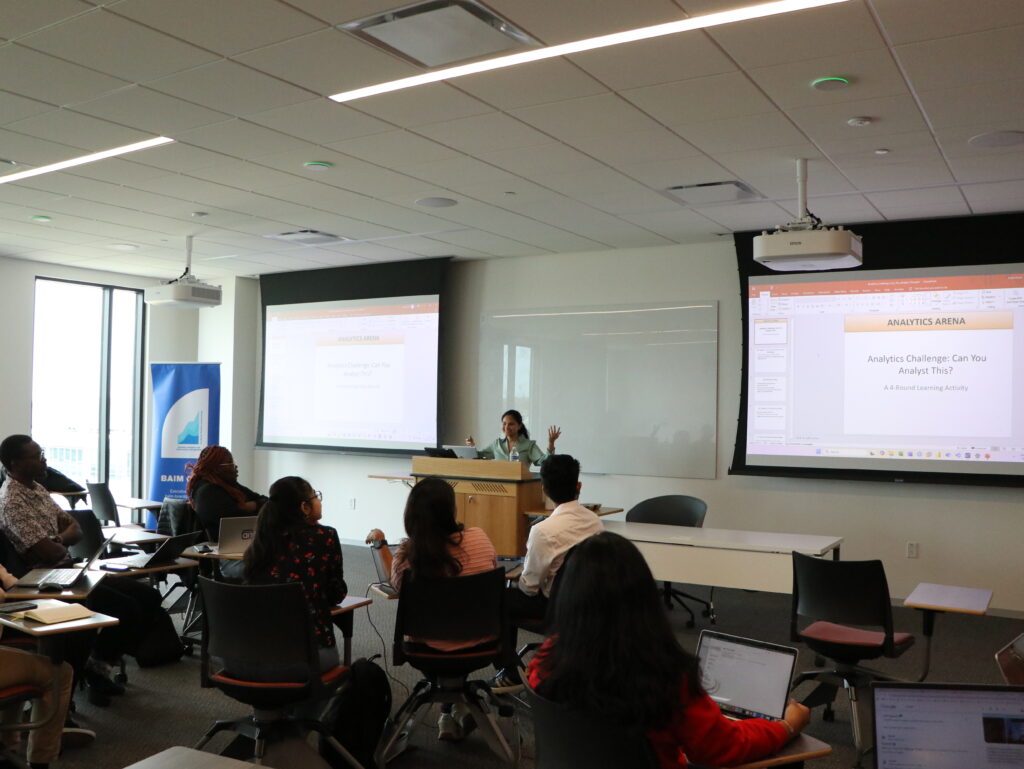
I was deeply honored and absolutely delighted when I received an invitation from the Business Analytics and Information Management (BAIM) Graduate Student Association (GSA) to speak at one of their Fireside Chat events. It was an incredible opportunity—one that I truly felt blessed to be a part of. Being asked to speak with students who are just beginning their professional journeys, getting ready to enter the job market, and make important career choices, felt both humbling and exciting.
It all began on December 18th, when I received an email from the BAIM GSA. The message was warm and thoughtful. They informed me about an upcoming Fireside Chat series and extended the invitation for me to be a guest speaker. Just being considered for such a platform filled me with gratitude. I immediately knew this was something I wanted to be a part of.
As the weeks passed, I stayed in touch with the association. The communication was seamless and collaborative. Eventually, they proposed a date—Friday, April 18th. That gave me a few months to prepare, and my mind was already brimming with ideas.
One of the best things about being invited was the creative freedom they gave me. After a short introduction to my career and personal journey, I was free to engage with students however I saw fit. The goal was simple: to spark conversation and inspire questions.
But I kept thinking to myself—only words never make a difference. Words can be thought-provoking, yes, but true change only happens through action. That idea stayed with me and echoed in my mind every day leading up to the event. And then it clicked—why not turn this chat into something more interactive? Why not create an experience that would not only help the students prepare for the job market but also expand their thinking?
I didn’t waste a second after I saw the announcement. The moment this thought crossed my mind, I picked up a pen and began outlining my ideas on white paper.
Why WHITE PAPER?
Because for me, it’s a space of complete freedom. A blank canvas that lets me connect thoughts without digital distractions. White paper allows me to think out loud, scribble, cross out, and redraw ideas as they form in a structured way. It brings a sense of raw creativity that no app or doc file can replace. Also, it is the most used way by businesses to outline a project.
So, I started from there. Drawing from my own experiences—especially the challenges and learning moments I encountered in my work environment—I designed a 4-round activity for the students. The goal was to go beyond a one-sided talk. I wanted students to think, reflect, and participate.
As April 18th neared, everything started falling into place. The agenda was fixed, the format was set, and we were working with a limited two-hour window. That’s when I realized: a white paper alone wasn’t going to cut it. I needed something with more structure and visual engagement—something dynamic that could guide the students through each activity while also making room for learning, discussion, and their own insights.
Given that the event was right in the middle of a busy working day and time was tight, I decided to lean on a little help—help from AI.
Why AI?
Because I’ve always believed in staying ahead of the curve. If you don’t embrace technology, experiment with it, and learn how to make it work for you, you’ll slowly fall behind. Technology isn’t just a tool anymore; it’s a partner in creation.
So, I turned to ChatGPT. With the right inputs and context, it helped me generate a presentation outline. To my surprise, it gave me a solid base—one that I could then edit, shape, and refine into a format that matched my vision. I took the structure, added my own examples and personal style, and fixed any errors to make it fully my own.
By the time the event day arrived, I felt ready. Ready not just to speak, but to truly engage with the students.
Now, Coming to the Day of the Event
The day had finally arrived. It was April 18th—Good Friday. Since the event was scheduled right in the middle of the workday, I had to leave the office and make my way to the FINTECH building at the STAR Campus, where the event was being hosted. The commute was long, and traffic was intense. But with a little luck (and a lot of determination), I made it just in time.
As soon as I entered the building, I was welcomed by the executives from the BAIM Graduate Student Association. It was such a warm exchange—we greeted each other, and I took a moment to ask them how school was going. Their excitement was palpable. They told me how happy they were to have me there, and I couldn’t have been more grateful to be part of something so genuine.
The event was scheduled from 12:00 to 2:00 PM, but as expected due to traffic, people were running a bit late. By the time we had everyone gathered, it was around 12:30. I completely understood—it’s not easy navigating traffic on a Friday afternoon, and I had just experienced it myself. Experience teaches you patience, after all.
We eventually gathered a group of 12 to 16 students, and what stood out immediately was their enthusiasm. Despite all the hurdles they faced to make it to the event, their eagerness to learn was clear—and it made me feel incredibly cheerful and inspired.
I began the session with a simple introduction—who I am, what I currently do for a living, and what I enjoy doing in my free time. Then, I flipped the spotlight onto the students. I asked each of them to introduce themselves in the same way: name, current role or focus, and what they liked doing outside of academics or work.
It was a wonderful moment. Listening to students from such diverse backgrounds with a wide range of interests helped me get a better understanding of the audience in front of me. It wasn’t just a room of students—it was a room full of stories, aspirations, and creativity.
From there, I transitioned into sharing my own journey—what life looked like after graduation, how I kept myself motivated to continue learning, and what keeps me going today. I touched on my personal projects, like my #FridayFun series on LinkedIn, and the book I wrote that captured my thoughts and insights around navigating a tech-driven world especially from a business perspective.
Once the introductions and storytelling were done, we moved into the Q&A session. This part really brought the room to life. Every question reminded me that no two stories are the same. Each student came from a different place, with different goals and unique challenges. And that made every exchange richer and more meaningful.
We then dove into a conversation about skills, tools, and what’s happening in the job market right now. We explored how rapidly everything is evolving, especially with the rise of AI. I shared how my book speaks to these exact themes—the intersection of skills, technology, and human adaptability in a changing professional world.
It felt less like a lecture and more like a conversation—a shared moment of reflection and learning. I wasn’t just there to talk at them. I was there to learn with them.
Then Came the Time to Start the Activity
Once the Q&A session wrapped up, it was time to bring in the surprise I had planned—the analytics activity. I didn’t waste a moment and jumped right in. I told the students how I had designed this hands-on experience not just to answer their questions about what skills to learn or how to navigate the job market, but to show them what it could feel like working in the real world—with a touch of creativity and teamwork.
I explained that we would be doing four rounds of activities. After the second round, we’d take a short 10-minute break, and then continue with the rest. I reminded them to save their findings from the first and second rounds because they’d be using them again.
Here’s a brief look at each round of the activity:
Round 1: Hunt the Job (Find 5 recent analytics jobs from official websites)
Round 2: Decode the Skills (Identify 4 skills per job and suggest alternatives)
Break
Round 3: Analyst Decision-Maker (Solve a business problem based on one company)
Round 4: Dashboard Delivery (Create a simple, clear dashboard for a non-technical stakeholder)
While the students were completing the first two rounds, I took the 10-minute break after the second round as my cue to turn their inputs into something more dynamic. Using their chosen companies and insights, I asked ChatGPT to help me generate business scenarios that required strategic analysis—something they could truly dig into. With these in hand, I split the students into three teams and emailed each of them their respective scenarios.
From there, I set the stage: “I’m your executive stakeholder. I don’t use complex tech terms, and I may not understand the backend tools you use—but I need to know how your analysis helps my business. Your job is to explain it in the clearest way possible.”
They could use any tool they preferred—Excel, Power BI, Tableau, or even hand-drawn visuals—the only goal was to communicate insights effectively.
And let me tell you—this is when the energy in the room shifted. The students came alive. Every team got fully immersed in solving the challenge and working on their dashboards. It made me feel incredibly proud to see them so engaged, curious, and collaborative.
In just 10 minutes, each team shared their findings, proudly presenting their creative dashboards they have on mind. They highlighted the metrics that mattered, the methods they used, and the impact it would have on the company’s performance.
The team that stood out the most was the one that used Power BI. Their ability to weave together clear visuals, business impact, and analytics techniques was simply outstanding. And even though I never intended to judge the activity, witnessing their brilliance reminded me just how much I had learned through my own education at the University of Delaware.
To show my appreciation, I surprised all the students with little boxes of chocolates I had preplanned to gift them. It was a small gesture, but the excitement in their eyes made it feel huge.
As the event wrapped up, many students came up to me with heartfelt feedback. They told me how unexpected and refreshing the entire session was. That they loved the structure, the activity, and how it felt like a real-life challenge. Their appreciation, along with the kind words from the association members, truly touched me. I felt not only satisfied but fulfilled.
On the way back home, I spent over an hour on the road again. But this time, it didn’t feel long. I was replaying all the moments from the day, the connections made, the learning exchanged, and the joy shared. It was a day I’ll always cherish.
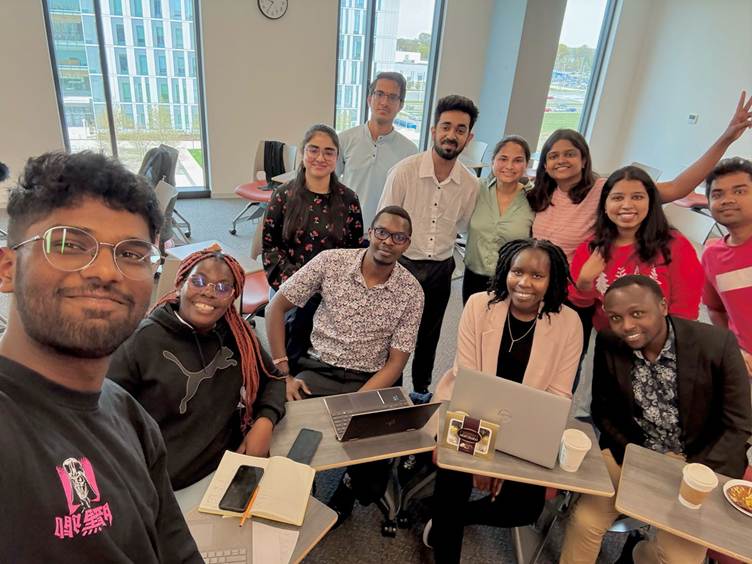
Thankful to the University of Delaware, for giving me this experience. For helping me grow, and for allowing me to give back to a community that means so much to me.
-
Exploring Innovation and Safety: Insights from IEEE Webinars on Chiplets and AI
The IEEE (Institute of Electrical and Electronics Engineers) is a leading organization that brings together experts to discuss and develop new technologies. I enjoy attending IEEE webinars—not just for learning, but because I’m genuinely curious about the innovations shaping our world. This past month, I attended two particular webinars that piqued my interest: “The Automotive Industry in Turmoil – Chiplets to the Rescue?” and “Agentic AI Safety.”
I’ve been fascinated by transportation—how we get from one place to another. Over the years, we’ve seen incredible advancements, from traditional cars to self-driving ones like Waymo. But I believe the real transformation is still ahead. During my undergraduate studies in electronics engineering, I developed a strong interest in the Internet of Things (IoT), which plays a key role in smart transportation. These IEEE sessions gave me a deeper understanding of the latest challenges and innovations in the industry.

The Automotive Industry in Turmoil – Chiplets to the Rescue?
The automotive industry is facing a huge challenge with semiconductor shortages. Traditionally, cars have relied on large, single-piece chips, but supply chain disruptions have made this approach unsustainable. This webinar discussed how chiplets—a modular way of designing semiconductors—can help. Instead of relying on one big chip, chiplets use smaller, specialized modules that work together, improving efficiency and lowering costs.
Many big tech companies, including Intel, AMD, and TSMC, are investing in chiplet technology to solve these shortages. For the automotive sector, this means better, faster, and more reliable computing power for electric vehicles (EVs), self-driving technology, and advanced driver-assistance systems (ADAS). The webinar featured professionals from these leading companies who shared insights on how chiplets will shape the future of automotive technology.

SLM in Field Fleet Analytics
SLM in Field Fleet Analytics generally refers to Service Level Management (SLM) within the context of field fleet analytics, which is the practice of managing and ensuring the performance of services provided by a fleet of assets or resources, often in real-time.
- Service Level Management (SLM) involves defining, agreeing upon, and monitoring specific performance metrics or targets (service levels) that an organization commits to deliver. These service levels could include parameters like response times, availability, and efficiency. SLM ensures that the performance of services consistently meets agreed expectations.
- Field Fleet Analytics involves the use of data analysis to track and optimize the performance of assets or resources that are deployed in the field, such as equipment, machinery, or any mobile resources used for various tasks. The analytics look at data like operational efficiency, utilization rates, maintenance cycles, and cost management, to name a few.
Combining SLM with Field Fleet Analytics means using data analytics to monitor and ensure that the field assets or resources meet the defined service levels—whether that’s maximizing uptime, minimizing costs, or optimizing performance. By doing so, businesses can improve operational efficiency, reduce downtime, and ensure that resources are deployed effectively.

Agentic AI Safety
Agentic AI Safety refers to the measures and strategies implemented to ensure that agentic AI systems—those that can make independent decisions and act autonomously—operate in a safe, predictable, and ethical manner. As agentic AI becomes more advanced and is used in critical systems like autonomous vehicles, healthcare, and finance, safety becomes a primary concern. The goal of Agentic AI Safety is to mitigate risks and ensure that these AI systems do not cause harm to humans, the environment, or themselves, even as they make decisions without direct human intervention.
Key aspects of Agentic AI Safety include:
- Ethical Decision-Making: Ensuring that AI systems make decisions based on ethical guidelines and respect for human rights, avoiding actions that could lead to harm or injustice.
- Accountability: Developing systems to monitor and track the decisions made by AI, making sure that there is clarity on who or what is responsible for its actions, especially in case of failures or unintended consequences.
- Transparency: Ensuring that the decision-making process of AI systems is understandable and explainable to humans, so that their actions can be trusted and verified.
- Safety Protocols: Implementing fail-safes, testing, and redundant systems to make sure that AI systems behave predictably and safely, even in unexpected or hazardous situations. This might include backup systems or emergency stop mechanisms.
- Regulations and Standards: Developing and adhering to industry regulations, safety standards, and guidelines to ensure the safe deployment and operation of autonomous AI systems.
In practical terms, Agentic AI Safety becomes critical in areas such as autonomous vehicles (where AI must make split-second decisions), healthcare (where AI might prescribe treatments or make diagnoses), and military applications (where AI systems might make decisions with life-or-death consequences).
The focus on Agentic AI Safety is growing as AI systems become more autonomous, and it’s a field that aims to ensure these systems benefit society while minimizing risks.
How Chiplets and Agentic AI Work Together
As I listened to both webinars, I couldn’t help but wonder: what if chiplets and agentic AI worked together? At first, they might seem like two separate technologies, each tackling different challenges, but as I thought more about it, I realized that these two innovations could complement each other in powerful ways.
In my mind, I began to picture a future where chiplets provide the foundational hardware for AI systems, allowing them to scale and process data more efficiently. With the growing complexity of self-driving cars and other autonomous systems, the computational power required to handle the massive amounts of data they generate is staggering. AI models need to analyze sensor data, interpret traffic patterns, and make real-time decisions—things that require immense processing speed and power. Chiplets, with their modular design, could provide the perfect solution, offering a way to build processors that can be customized for specific AI needs, allowing them to perform faster and more efficiently.
What if, instead of relying on a single monolithic chip, we had chiplets designed to process specific tasks required by agentic AI? One chiplet could focus on processing sensor data, while another could handle decision-making algorithms, all working together to improve the performance of autonomous systems. The beauty of chiplets is that they allow for flexibility and adaptability—something that is essential in an environment as dynamic and complex as self-driving vehicles.
I could also see how integrating these technologies could reduce the overall cost and improve the scalability of autonomous systems. If chiplets make hardware more modular and efficient, and agentic AI makes intelligent decisions more autonomously, the synergy between them could drastically speed up the development and deployment of safer, more reliable autonomous vehicles.
It was exciting to think about how these two technologies could evolve in tandem. They could not only improve the capabilities of self-driving cars but also make them safer, more efficient, and more responsive to changing conditions. As I pondered the potential, I couldn’t help but feel a sense of optimism about the future of transportation—where AI-driven decisions powered by chiplet-based processors could make our roads smarter and safer for everyone.
Conclusion
No matter how advanced technology becomes, safety should always be the priority. People will continue to innovate and create incredible machines, but ensuring that these machines protect human lives is what truly matters. That’s why I’m passionate about learning and contributing to advancements that make transportation safer.
Since I have been involved with safety in my current workplace, which is in transit, I have been immensely grateful to have a place where I contribute to decision-making. There is still a lot to be done, but my work will not stop until it is safe for every person to travel anywhere. Whether it’s through chiplets improving AI performance or agentic AI making smarter decisions, the ultimate goal should be to create a world where technology serves and safeguards us.
Attending IEEE webinars helps me stay informed and work toward this vision—one where innovation and safety go hand in hand. Seeing industry leaders share their expertise reinforces my belief that no matter how far technology advances, protecting people should always be at the heart of every innovation. As an engineer, my aim is to contribute to technologies that prioritize safety—because no matter what humans decide to do with machines like cars, our responsibility is to ensure they protect us.
-
National Transit Database (NTD)
The National Transit Institute (NTI), based at Rutgers University, plays a crucial role in supporting public transportation agencies across the United States. NTI provides training and educational resources to transit professionals, ensuring they have the knowledge and skills to enhance the efficiency, safety, and sustainability of transit systems nationwide.
The Federal Transit Administration (FTA), through the National Transit Institute (NTI), provided a comprehensive National Transit Database (NTD) reporting course on March 19 and March 20, 2025, in Philadelphia, PA. This course was designed to help transit professionals understand the importance of accurate and timely NTD reporting. As the primary source of data on the financial, operational, and asset conditions of transit agencies across the U.S., the NTD plays a crucial role in securing federal funding, benchmarking transit performance, and shaping policy decisions.
I was glad to register for this training because, in my role as a Financial Analyst, I am responsible for NTD reporting for the transit agency I work for—Delaware Transit Corporation (DART).
This training was a perfect opportunity to deepen my understanding of NTD reporting requirements, data submission processes, and best practices, ensuring that DART’s reports align with FTA guidelines.
Before I walked in, I realized that the SEPTA office is in an amazing location. The moment you step outside, you’re greeted by a stunning view—one that perfectly captures the energy and vibrancy of the city.

Stunned by that breathtaking view, I stepped inside the building—and that’s when the SEPTA vibe truly hit me. The energy of a bustling transit hub, the sleek yet functional design of the space, and the clear sense of purpose in the air all made it evident that this was the heart of Philadelphia’s transportation network.

SEPTA (Southeastern Pennsylvania Transportation Authority) is the lifeline of public transit in the Philadelphia region, serving five counties—Philadelphia, Bucks, Chester, Delaware, and Montgomery. As one of the largest transit systems in the U.S., SEPTA operates buses, trolleys, subways, regional rail, and paratransit services, connecting millions of riders to their destinations every year.
With its extensive network and commitment to improving transit accessibility, SEPTA plays a crucial role in keeping the region moving efficiently. Walking into their headquarters, I could instantly feel the scale and importance of their operations—this was more than just a workplace; it was the nerve center of a system that powers an entire metropolitan area.
Then, I entered the training room, scanning the space and taking in the energy around me. There it was—my name, placed neatly on a table, reserving a seat for me. In that moment, a wave of gratitude washed over me. I was about to embark on a learning experience that directly impacts millions of lives, shaping the way people travel, connect, and move forward in their daily journeys.

As I walked into the room, I was instantly surrounded by a diverse group of professionals—people from all across the United States, representing different transit agencies, all gathered for one purpose: to learn about NTD reporting.
The room was filled with representatives from transit agencies across the country—SEPTA, Keolis Transit America, Green Mountain Transit, Camtran, Harris County Transit, Arlington County Transit, Lafayette Consolidated Government, ReVolt Battery Technology, Hampton Roads Transit, and LRGVDC Valley Metro—hailing from Connecticut, Pennsylvania, Delaware (me!), New Jersey, California, Louisiana, Ohio, Vermont, Virginia, Puerto Rico, and Texas.
How amazing is that!!
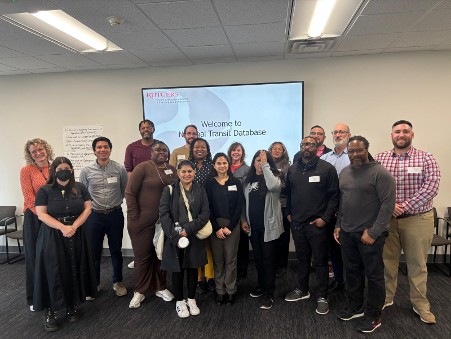
I am truly grateful for the opportunity to be a part of this. A reporting process that takes transit agencies months of work and collaboration to ensure accurate numbers was brilliantly taught by just two individuals in only two days. Their expertise, combined with engaging activities, made the sessions both insightful and enjoyable. The interactive approach not only kept us engaged but also addressed countless queries more effectively than a traditional lesson ever could. Their dedication and support have been truly invaluable.

Not only did this opportunity help me gain valuable knowledge, but it also answered many of my questions and gave me insight into how the FTA thinks, helping me better understand the reporting process. Plus, earning the certification further equips me to excel in the transit industry.

What an experience—two days, countless insights, and a newfound appreciation for the world of transit reporting!
-
AI Solutions: From Breakrooms To Boardrooms
I began this book with the goal of uncovering solutions for every department and exploring how we can enhance our traditional work processes with artificial intelligence. The time has come for us to truly understand AI and take control of it, rather than allowing it to control us. As the saying goes, “Those who don’t stay updated with the world around them will be left behind in the race.” In today’s fast-paced world, embracing new developments in AI is essential to staying competitive. Now, let’s dive into each department and discover how AI is transforming them for the better, ensuring that we lead the way rather than fall behind.